Find home theater mini projector for Business, Teaching, Theater
Source 30 home theater mini projector models from verified suppliers. Compare specifications like resolution, brightness, and connectivity options to find the right device for business, teaching, or theater applications.
Key considerations
Products List


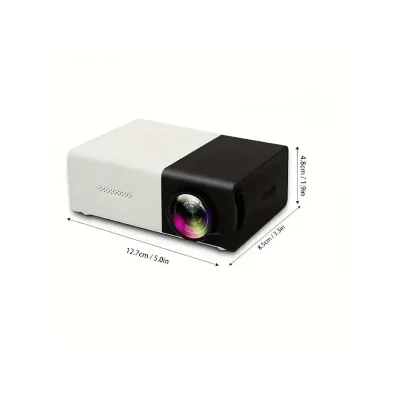
Comprehensive Sourcing Guide
Strategic Sourcing Guide for Home Theater Mini Projectors
The global demand for home theater mini projectors has surged as consumers seek immersive entertainment solutions that balance portability with high-fidelity performance. For B2B procurement professionals, navigating this market requires a disciplined approach that distinguishes between marketing claims and verifiable technical specifications. This guide synthesizes observed market data and technical attributes to provide a robust framework for sourcing decisions. Buyers must prioritize evidence-based verification over supplier assertions, ensuring that selected units meet the rigorous demands of commercial and residential deployment. The following sections detail the critical evaluation criteria, technical benchmarks, and supply chain considerations necessary for successful procurement.
Technical Specifications and Performance Verification
The core of any home theater mini projector sourcing strategy lies in the precise verification of technical specifications. The market presents a diverse array of models, ranging from compact portable units to more robust desktop configurations. A primary observation in the current supply landscape is the variation in brightness capabilities. While some units are observed with brightness levels under 1500 lumens, suitable for controlled environments, others in the high-performance segment exceed 2500 lumens, with peak specifications reaching up to 6000 lumens (equivalent to 400 ANSI Lumens). Procurement teams must explicitly define the ambient light conditions of the intended deployment site to determine the appropriate brightness tier.
Resolution is another critical differentiator. The data indicates a prevalence of 720p (1280x720) resolution in the portable category, which serves as a baseline for entry-level home theater applications. However, for true high-definition home theater experiences, buyers should target units with a native resolution of 1920x1080P. The image system technology predominantly relies on LED sources, which offer a significant advantage in longevity. Observed LED lamp life spans consistently reach 30,000 hours, a figure that should be verified against the specific unit's datasheet to ensure the projection engine maintains color accuracy over its operational lifecycle.
Connectivity and system integration are equally vital. Modern units frequently support Bluetooth 5.0, with advanced models integrating Bluetooth 5.4 and dual-band WiFi 6 (2.4G/5G) for seamless wireless streaming. The operating system environment is often Android 11, providing a neutral English user interface that supports a wide range of multimedia applications. Buyers must verify the presence of specific multimedia interfaces, including USB, HDMI, AV, and DC power inputs, to ensure compatibility with existing home theater audio-visual equipment.
Display Technology and Optical Engine Architecture
The internal architecture of the projector dictates image quality and durability. The dominant display technology observed in the supply chain is the Single LCD system, specifically utilizing 3.97-inch panels. This technology is central to the cost-performance ratio of mini projectors. However, the optical engine's physical protection is a key area for verification. High-end models feature a patent optical engine described as fully sealed, dustproof, and water-proof. This sealing is crucial for maintaining image clarity in environments where dust accumulation could degrade the LCD panel over time.
Contrast ratios also play a significant role in the "home theater" experience. Observed specifications indicate contrast ratios around 2000:1 for LED projectors. While this is functional, buyers seeking deep blacks and vibrant colors should investigate if the optical engine supports higher contrast capabilities or if the claimed ratio is measured under specific, non-standardized conditions. The projection lens technology has evolved to include automatic focusing and automatic trapezoidal correction. These features, often supported by vertical keystone correction ranging from ±50 degrees, significantly reduce the setup time and complexity for end-users, making the device more accessible for non-technical consumers.
Application Scenarios and Usage Flexibility
The versatility of home theater mini projectors allows them to serve multiple distinct use cases. The primary application is clearly defined as "Home Project," but the data also highlights usage in business, teaching, and theater environments. This multi-functionality suggests that a single procurement order can serve diverse departments within an organization or cater to a broad consumer base. The projection ways are equally flexible, supporting front, desk, rear, and ceiling-mounted configurations. This adaptability is essential for buyers supplying rental companies, educational institutions, or home entertainment retailers.
Screen size capabilities further define the application scope. Units are observed to support screen sizes ranging from 55 to 120 inches, allowing for a wide range of installation scenarios from intimate living rooms to larger community halls. The aspect ratio support, including 4:3, 16:9, and 16:10, ensures compatibility with various content formats, from legacy video to modern widescreen cinema. Wireless screen mirroring functions, such as Miracast, AirPlay, and DLNA, are standard features that enable direct casting from smart mobile devices, a critical requirement for modern home theater setups.
Cost Drivers and Pricing Structure Analysis
Understanding the cost drivers is essential for negotiating favorable terms and managing budget expectations. The observed price range in the market spans from $9 to $159 USD, a wide disparity that reflects differences in resolution, brightness, memory, and build quality. The minimum order quantity (MOQ) varies significantly, ranging from 1 unit to 200 units. This flexibility allows buyers to test the market with small batches or secure bulk pricing for large-scale deployments.
Memory configuration is a notable cost driver. Units with 2GB RAM and 8GB storage are common, but higher specifications may command a premium. The physical dimensions and weight also influence logistics costs. For instance, a unit weighing 1.1kg with dimensions around 107.8x157x119.7mm presents different shipping considerations compared to larger desktop models. Buyers should analyze the total cost of ownership, including packaging requirements. Observed packing methods range from standard boxes to anti-shock packing with foam, which adds to the unit cost but reduces the risk of damage during transit.
Supplier Evaluation and Origin Verification
When evaluating suppliers, the origin of the product is a primary factor. The data indicates that a significant portion of these projectors originates from Shengzheng, China. While this provides a baseline for sourcing, buyers must conduct due diligence to verify the specific manufacturing capabilities of the supplier. The presence of specific product models, such as E450, A11, P30MAX, V19, B02, S40, and CR38, suggests a diverse product line. However, the existence of a model number does not guarantee consistent quality across all batches.
Buyers should verify the supplier's ability to provide detailed technical documentation, including the specific standards and dimensions for each model. For example, the standard dimensions for certain models are listed as 25x31x24, while others differ significantly. This variation implies that the supplier manages a complex inventory of different form factors. The procurement team must ensure that the supplier can consistently deliver units that match the specified dimensions and weight, as deviations can impact shipping calculations and end-user expectations.
Quality Control and Compliance Standards
Quality control in the projector sector requires rigorous testing of both optical and electronic components. The "3.97 Inch Single LCD" standard is a specific technical benchmark that must be verified in every unit. Buyers should request test reports that confirm the brightness levels, contrast ratios, and lamp life claims. The claim of a 30,000-hour lifespan for the LED lamp is a critical metric that should be supported by accelerated life testing data.
Compliance and certification checks are equally important. While specific certification names are not explicitly listed in the provided data, buyers must ensure that the products meet the electrical safety standards of the destination market. The power supply specifications of AC100-240V/50/60Hz indicate a wide voltage range, but the actual compliance with regional safety standards (such as CE, FCC, or RoHS) must be confirmed. The "Full Sealed & Dustproof & Water Proof" optical engine claim requires physical verification to ensure the sealing integrity meets the stated IP rating or equivalent protection level.
Long-Term Procurement and Supply Chain Resilience
Long-term procurement strategies for home theater mini projectors must account for the rapid evolution of technology and the potential for supply chain disruptions. The observed lead times and MOQs suggest that suppliers are capable of handling both small and large orders, but buyers should establish clear communication channels regarding production schedules. The availability of customization is a key feature, allowing buyers to tailor products for specific markets or branding requirements.
Sustainability and after-sales support are also critical considerations. The 30,000-hour lamp life reduces the frequency of maintenance and replacement, contributing to a lower total cost of ownership. However, buyers must verify the availability of spare parts and the supplier's warranty policies. The integration of advanced features like automatic focusing and wireless connectivity means that software updates may be required to maintain functionality. A supplier that provides firmware support and a clear roadmap for system updates is essential for long-term success.
Comparative Analysis of Key Product Attributes
To facilitate decision-making, the following table summarizes the key attributes observed in the current market, highlighting the variations that buyers must consider during the selection process.
| Attribute | Entry-Level / Portable Observation | High-Performance / Home Theater Observation | Verification Requirement |
|---|---|---|---|
| Brightness | < 1500 Lumens | > 2500 Lumens (Max 6000 Lumens) | Confirm ANSI Lumens vs. LED Lumens |
| Resolution | 720p (1280x720) | 1920x1080P (Native) | Check native vs. supported resolution |
| Display Tech | 3.97 Inch Single LCD | 3.97 Inch Single LCD (Sealed) | Verify optical engine sealing |
| Memory | 2GB + 8GB | 2GB + 8GB (Standard) | Confirm actual usable storage |
| Connectivity | Bluetooth 5.0 | Bluetooth 5.4 + WiFi 6 | Test wireless stability |
| Correction | Manual or Basic Keystone | Auto Focusing + Auto Keystone | Verify correction speed and accuracy |
| Lamp Life | 30,000 Hours | 30,000 Hours | Request life test certification |
| Weight | 1.1kg | Variable | Verify shipping weight |
Conclusion
Sourcing home theater mini projectors requires a meticulous approach that balances technical performance with commercial viability. By focusing on verified specifications such as brightness, resolution, and display technology, buyers can mitigate the risks associated with marketing exaggerations. The diversity of models available, from the E450 to the CR38, offers flexibility, but it also demands rigorous quality control and supplier evaluation. As the market continues to evolve, maintaining a focus on long-term value, including lamp life and software support, will ensure that procurement strategies remain effective and competitive. Buyers must remain vigilant in their verification processes, ensuring that every unit delivered meets the precise needs of the end-user and the standards of the target market.
FAQs
What is the native resolution of the portable projector models?
The portable projector models feature a native resolution of 720p (1280x720). This baseline specification serves entry-level home theater applications, while high-performance units may offer 1920x1080P native resolution for clearer images.
How bright are the LED projectors in this product range?
Brightness varies significantly across the range, with some units under 1500 lumens and others exceeding 2500 lumens. The highest observed peak brightness reaches 6000 lumens, equivalent to 400 ANSI Lumens, suitable for varied ambient light conditions.
Which display technology is used in these mini projectors?
These projectors predominantly utilize a 3.97-inch Single LCD display technology. This system is central to the cost-performance ratio, often paired with patent optical engines that are fully sealed, dustproof, and water-proof for durability.
Can these projectors support wireless screen mirroring functions?
Yes, they support wireless screen mirroring via Miracast, AirPlay, and DLNA protocols. This allows direct casting from smart mobile devices, a critical requirement for modern home theater setups without additional cables.
What is the expected LED lamp life for these units?
The LED lamp life is consistently observed to be 30,000 hours. This longevity reduces maintenance frequency and contributes to a lower total cost of ownership for both commercial and residential deployments over time.
Which operating system versions are available for these projectors?
Many units run on Android 11 with a neutral English user interface. This system supports a wide range of multimedia applications and ensures compatibility with various streaming services and local file formats.
What are the standard dimensions for the portable projector models?
Standard dimensions vary by model, with some measuring 107.8x157x119.7mm and others around 25x31x24. Buyers must verify specific model dimensions as they impact shipping calculations and end-user installation expectations.
How much memory do the standard projector configurations include?
Standard configurations typically include 2GB of RAM and 8GB of storage. While this is common, higher specifications may command a premium, and buyers should confirm actual usable storage capacity before procurement.